The 4 Types of Cybersecurity SEO (And How Each One Works)
Cybersecurity SEO breaks down into four disciplines: technical, on-page, off-page, and content SEO. Here's how each one works specifically for security companies.
■ TL;DR
- ▸The 4 types of cybersecurity SEO explained: technical, on-page, off-page, and content SEO. How each works for security companies with practical examples.
- ▸By Cybersecurity Marketing Agencies — 11 min read.
- ▸Topics: SEO, Cybersecurity Marketing, Technical SEO, Content Strategy.
Cybersecurity SEO is not a single discipline. It is four interconnected disciplines, each with distinct requirements for security companies. Understanding what each type involves -- and where they overlap -- is the difference between a strategy that generates qualified pipeline and one that burns budget on vanity metrics.
If you are new to the concept, our guide on what cybersecurity SEO is covers the foundational definition. This article breaks down the four types in detail, with cybersecurity-specific examples for each.
Type 1: Technical SEO
Technical SEO is the foundation everything else sits on. It covers how search engines crawl, index, and render your site. For cybersecurity companies, technical SEO carries a few challenges you will not find in other industries.
HTTPS as table stakes
There is a particular irony in a cybersecurity company having SSL certificate issues. It happens more often than you might think -- expired certificates, mixed content warnings, or misconfigured redirects from HTTP to HTTPS. For a security vendor, any browser warning is a credibility disaster, and Google treats HTTPS as a baseline ranking signal. Get this right before worrying about anything else.
Core Web Vitals and page speed
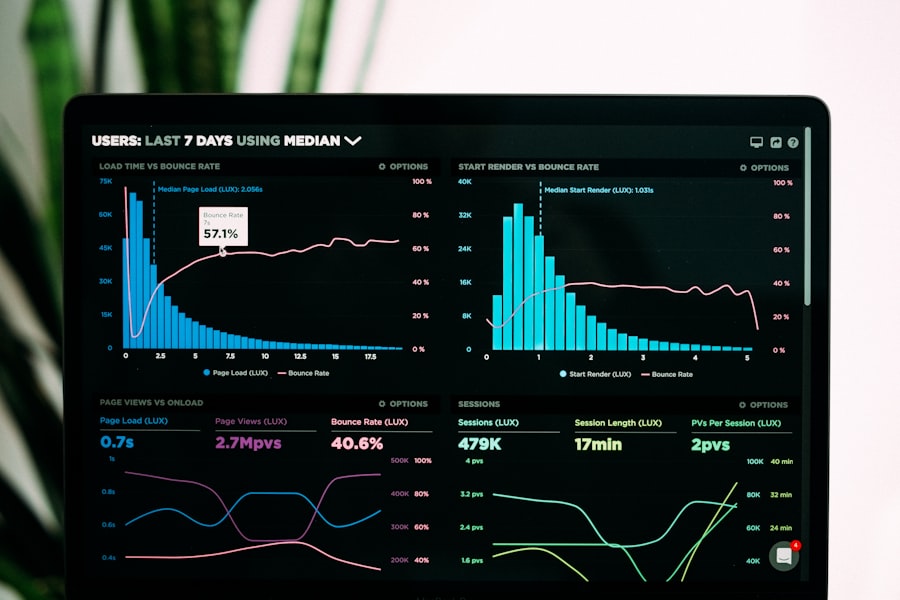
Security company websites tend to be heavier than average. Interactive product demos, embedded scanning tools, JavaScript-heavy dashboards, and large PDF whitepapers all drag down page speed. Google's Core Web Vitals -- Largest Contentful Paint, Interaction to Next Paint, and Cumulative Layout Shift -- directly affect rankings. Lazy-load heavy assets, compress images, and defer non-critical scripts. If your site takes four seconds to load because of an embedded threat map, that threat map is costing you organic traffic.
Schema markup for cybersecurity
Structured data helps search engines understand what your pages are about. For cybersecurity companies, the most valuable schema types are:
- ■Product schema for security tools and platforms (with pricing, features, and review data)
- ■FAQPage schema for knowledge base articles and compliance-related content
- ■Organization schema with industry-specific details, certifications, and contact information
Implementing these correctly can earn rich results in search -- FAQ dropdowns, product cards, and knowledge panel entries that increase click-through rates substantially.
Crawlability issues unique to security sites
Many cybersecurity companies gate significant portions of their content behind login walls or demo request forms. While gating has its place in lead generation, search engines cannot crawl gated content. If your most valuable technical resources are invisible to Googlebot, they cannot rank.
JavaScript-heavy dashboards and single-page application architectures create additional crawl challenges. Ensure critical content is server-side rendered or pre-rendered for search engine bots. Check your XML sitemaps regularly to confirm they include all indexable pages, verify your robots.txt is not accidentally blocking important sections, and use canonical tags to prevent duplicate content issues across product pages that share similar descriptions.
Mobile-first indexing
Google indexes the mobile version of your site first. Data-heavy security content -- comparison tables, architecture diagrams, threat matrices -- often renders poorly on mobile. If your mobile experience is broken, your desktop rankings suffer too. Test every page type on mobile devices, not just your homepage.
Type 2: On-Page SEO
On-page SEO covers everything visible on the page itself: how content is structured, optimised, and presented to both users and search engines. In cybersecurity, on-page optimisation has to navigate an unusually acronym-heavy, technically dense landscape.
Keyword optimisation for cybersecurity terms
Cybersecurity is drowning in acronyms: SIEM, XDR, SOAR, ZTNA, EDR, MDR, CASB, CNAPP. Each of these terms has distinct search intent, and many of them overlap. Your keyword strategy must account for the fact that a CISO searching for "XDR vs EDR" has completely different intent from someone searching "what is XDR".
Map keywords to buyer intent stages. Informational queries ("what is zero trust") target awareness. Comparison queries ("best SIEM platforms 2026") target evaluation. Solution-specific queries ("CrowdStrike vs SentinelOne pricing") target decision-makers ready to shortlist.
Title tags and meta descriptions
Your title tags and meta descriptions need to speak to technical buyers without resorting to marketing fluff. A CISO scrolling through search results will skip past anything that reads like generic sales copy. Be specific, be accurate, and include the primary keyword naturally. "7 SIEM Deployment Mistakes That Increase Mean Time to Detect" outperforms "Why You Need a Better SIEM Solution" every time.
Header hierarchy for technical content
Long-form cybersecurity content -- and most of it should be long-form -- requires clean header hierarchy. Use H2s for major sections, H3s for subsections, and avoid skipping levels. This is not just a best practice; it is how Google understands the structure and topical depth of your content. A well-structured 3,000-word guide on cloud security posture management will outrank a 500-word overview with no clear hierarchy.
Internal linking architecture
Topic clusters are the backbone of cybersecurity SEO architecture. Your pillar pages cover broad topics (e.g., endpoint security) and link to cluster pages that go deep on subtopics (e.g., EDR vs XDR, endpoint detection best practices, managed endpoint security). This internal linking structure signals topical authority to Google and keeps users moving through your site rather than bouncing back to search results.
Image optimisation and URL structure
Cybersecurity content relies heavily on visuals: network architecture diagrams, threat landscape infographics, product screenshots, and workflow illustrations. Every image needs descriptive alt text, compressed file sizes, and modern formats like WebP where possible.
URL structure matters too. Keep URLs descriptive and concise. /blog/siem-deployment-guide outperforms /blog/post-12847 or /resources/whitepapers/2026/q1/siem-guide-final-v3. Clean URLs are easier for search engines to parse and for users to trust.
Type 3: Off-Page SEO
Off-page SEO is everything that happens away from your website to build authority, trust, and relevance. For cybersecurity companies, this is where generic advice breaks down most dramatically.
Link building in cybersecurity
Not all backlinks are created equal, and in cybersecurity, domain relevance matters enormously. A single link from Dark Reading, CSO Online, SC Media, or Cybercrime Magazine carries more weight than a hundred links from general business directories or unrelated blogs. Google evaluates the topical relevance of linking domains, and a cybersecurity company with links from technology and security publications builds far stronger authority than one with links from random guest post farms.
Thought leadership and guest contributions
Security publications actively seek expert contributors. CISOs, threat researchers, and security architects within your organisation can publish analysis, commentary, and technical deep dives in industry outlets. These contributions build brand authority, earn high-quality backlinks, and position your company as a credible voice -- all of which feed back into search rankings.
The key is genuine expertise. Security editors can spot surface-level content instantly. Contributions must offer original insight, proprietary data, or genuinely useful technical guidance.
Digital PR for security companies
Cybersecurity companies have a unique asset for digital PR: original threat research. Vulnerability disclosures, threat intelligence reports, annual breach analyses, and zero-day findings are natural link magnets. When a security company publishes original research that journalists cite, the resulting links from news outlets and industry publications are among the most valuable backlinks available.
Industry awards and analyst recognition -- Gartner Magic Quadrant placements, Forrester Wave inclusions, SC Awards, Cyber Defence Magazine honours -- also generate backlinks from authoritative domains and serve as trust signals that reinforce E-E-A-T (Experience, Expertise, Authoritativeness, and Trustworthiness).
Social signals from LinkedIn
While social signals are not a direct ranking factor, LinkedIn is where cybersecurity decision-makers spend their time. Content that gains traction on LinkedIn -- shared by CISOs, commented on by security professionals -- drives referral traffic, increases brand searches, and earns natural backlinks. For security companies, LinkedIn engagement is a stronger signal than any other social platform.
Why generic link building fails
Generic link building agencies that rely on mass outreach, PBNs (private blog networks), or irrelevant directory submissions are not just ineffective for cybersecurity companies -- they are actively harmful. Links from irrelevant domains dilute your topical authority. Worse, aggressive link schemes can trigger Google penalties. Agencies that understand SEO for cybersecurity companies know that quality and relevance trump volume in this sector.
Type 4: Content SEO
Content SEO is the strategic discipline of creating content that ranks in search and converts visitors into pipeline. In cybersecurity, this means producing content that satisfies both Google's algorithms and the scrutiny of deeply technical buyers.
Content that ranks AND converts
The challenge in cybersecurity content SEO is that ranking and converting often pull in different directions. High-volume informational keywords ("what is a firewall") attract traffic but rarely convert. Low-volume commercial keywords ("managed SIEM for mid-market healthcare") convert well but attract little traffic. The solution is a balanced content portfolio that covers both, with clear internal pathways from educational content to product-focused pages.
Mapping content to the CISO buyer journey
Effective cybersecurity content maps to three buyer stages:
- ■Awareness: Threat research, industry trend analysis, educational explainers. The buyer is identifying a problem. Content here should inform without selling.
- ■Evaluation: Comparison guides, feature breakdowns, integration documentation. The buyer is evaluating solutions. Content here should demonstrate capability and differentiation.
- ■Decision: Case studies, ROI calculators, compliance mapping tools, pricing transparency. The buyer is building a business case. Content here should reduce risk and accelerate procurement.
Each stage requires different keywords, different depth, and different calls to action.
Technical accuracy as a ranking factor
Google classifies cybersecurity content under YMYL (Your Money or Your Life), which means it applies heightened quality standards. E-E-A-T -- Experience, Expertise, Authoritativeness, and Trustworthiness -- is not optional in this space. Content that contains inaccuracies, outdated information, or lacks credible authorship will struggle to rank regardless of how well it is optimised for keywords.
Attribute content to named authors with verifiable security credentials. Cite primary sources. Link to CVE databases, NIST frameworks, and vendor documentation. These signals tell Google -- and your readers -- that your content is trustworthy.
Content types that work in cybersecurity
Not all content formats perform equally. The types that consistently rank and generate pipeline for security companies include:
- ■Threat research and intelligence reports -- original data that journalists and analysts cite
- ■Comparison and evaluation guides -- "SIEM vs SOAR", "Top 10 endpoint security platforms"
- ■Compliance framework guides -- mapping products to SOC 2, ISO 27001, NIS2, DORA requirements
- ■ROI calculators and assessment tools -- interactive content that captures leads while providing genuine value
- ■Technical how-to guides -- deployment guides, integration tutorials, configuration walkthroughs
Content depth over content velocity
In cybersecurity, depth wins. A single 4,000-word guide on cloud workload protection that covers architecture, deployment, use cases, and evaluation criteria will outrank ten 400-word blog posts on related subtopics. Security buyers want comprehensive resources they can trust, not a stream of thin content.
That said, content must be maintained. Threats evolve, technologies change, and compliance frameworks update. A guide written in 2024 that references outdated threat statistics or deprecated product features loses authority quickly. Build a content refresh cadence into your strategy -- quarterly reviews at minimum for high-traffic pages.
How the 4 Types Work Together
These four types of cybersecurity SEO are not independent workstreams you can pick and choose between. They are interdependent, and neglecting any one of them undermines the others.
The best content in the world will not rank if your site has crawlability issues (technical SEO). A technically sound site with perfectly optimised pages will not build authority without quality backlinks (off-page SEO). Strong backlinks will not generate pipeline if your content does not address buyer intent (content SEO). And none of it works if your on-page fundamentals -- title tags, headers, internal links -- are not in place (on-page SEO).
The most successful cybersecurity companies treat SEO as a unified strategy across all four disciplines. For the complete framework on how to build and execute that strategy, read our cybersecurity SEO guide.
Whether you handle SEO internally or work with a specialist cybersecurity SEO agency, understanding these four types ensures you are asking the right questions, measuring the right metrics, and investing in the right activities to drive organic growth in one of the most competitive B2B markets.